
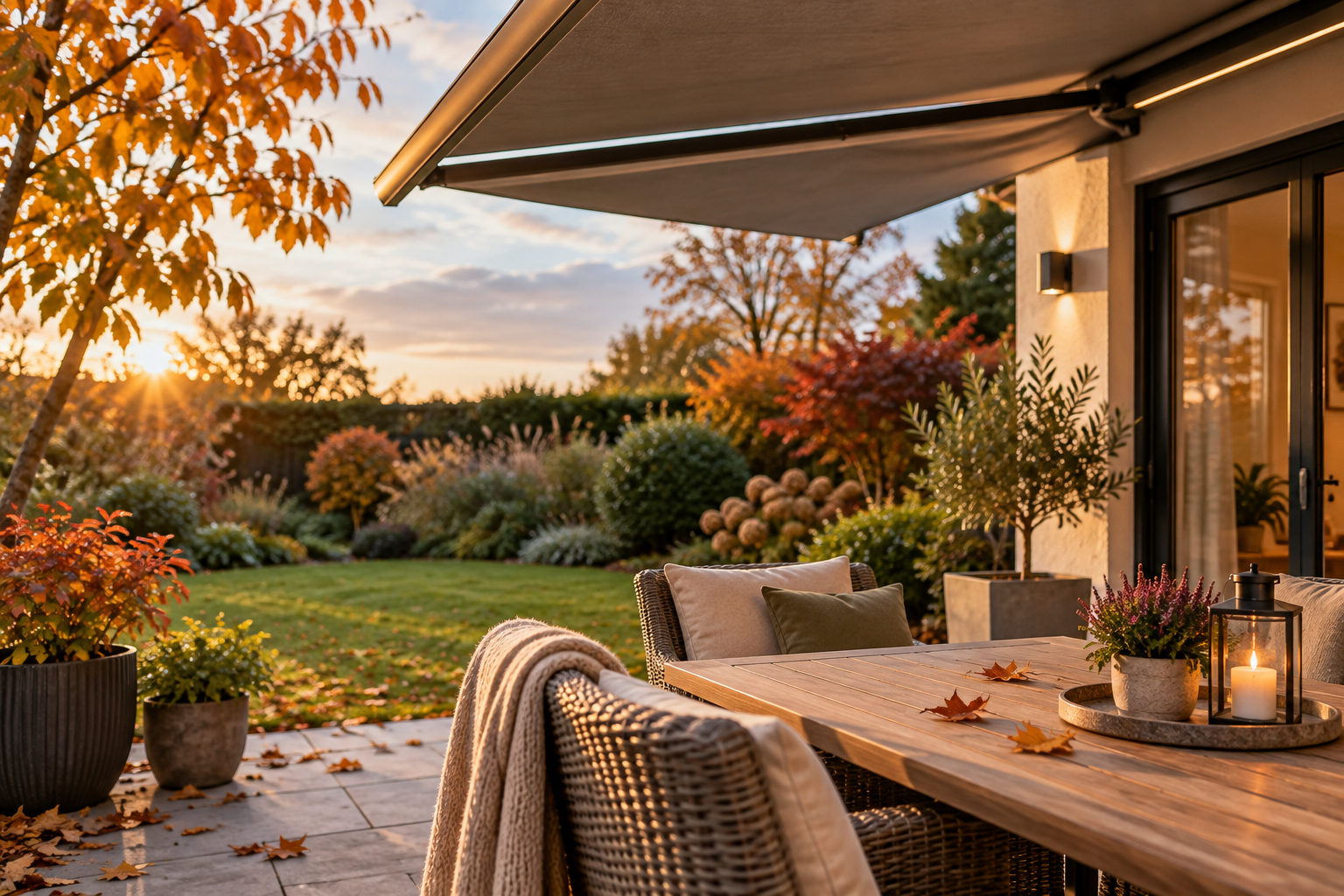
There comes a point every September when you realise the garden has started to change.
The evenings are getting darker, you’re reaching for a jumper much earlier than you were a few weeks ago, and those long summer evenings outside suddenly feel like they’re disappearing far too quickly. But closing down your summer garden doesn’t mean locking the back door and forgetting about it until spring. A little preparation now can protect your furniture, awning and outdoor accessories from the wetter, windier months ahead, while still leaving your garden ready to enjoy whenever autumn gives us one of those unexpectedly beautiful sunny days.
So, before everything gets permanently damp and covered in leaves, here are a few jobs worth doing.
1. Give your garden furniture a proper clean
After a summer of barbecues, drinks, pollen, dust and everything else the British weather has thrown at it, your outdoor furniture will probably appreciate some attention.
Give tables and chairs a thorough clean before covering or storing them. The appropriate cleaning method will depend on whether they’re wood, metal, plastic or rattan, so always follow the manufacturer’s care instructions.
It’s much nicer uncovering clean furniture next spring than discovering six months of dirt has been quietly sitting underneath the cover.
And don’t necessarily pack everything away just yet. If we get a sunny October afternoon, you’ll be very glad you left somewhere to sit.
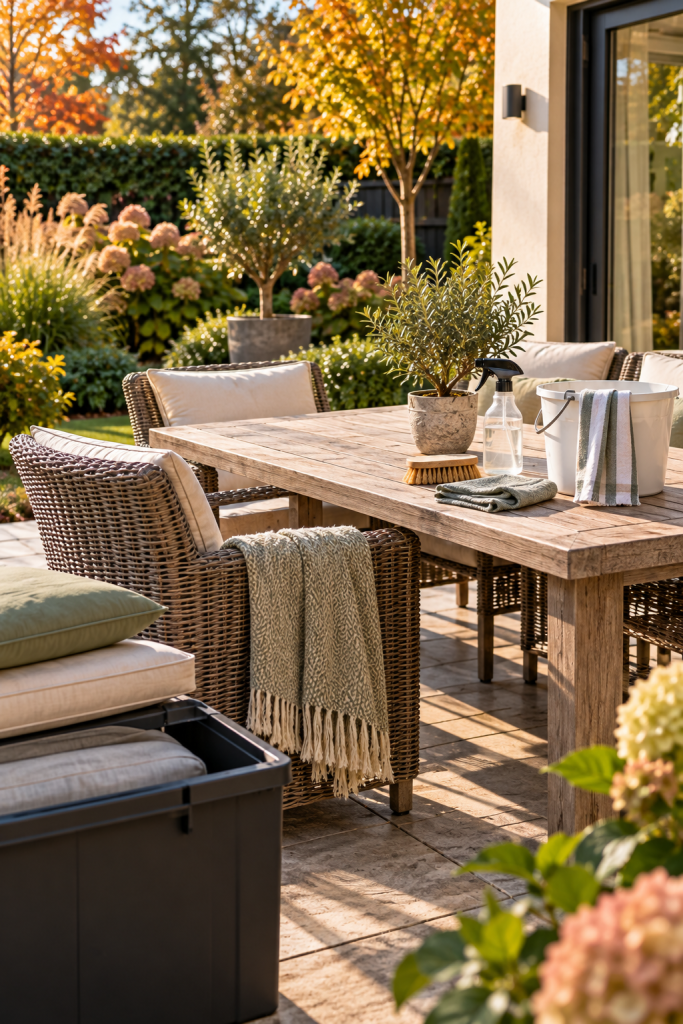
2. Rescue the cushions before the rain does
This is one of those jobs that’s incredibly easy to put off. You bring the cushions inside because it’s raining. The next day they’re back outside. Then eventually they’re left out during one particularly wet week and never quite recover.
If your outdoor cushions aren’t designed to remain outside throughout winter, now is a good time to clean them, make sure they’re completely dry and find somewhere dry to store them. You can always bring a couple back outside when the weather behaves.
3. Give your awning a little attention
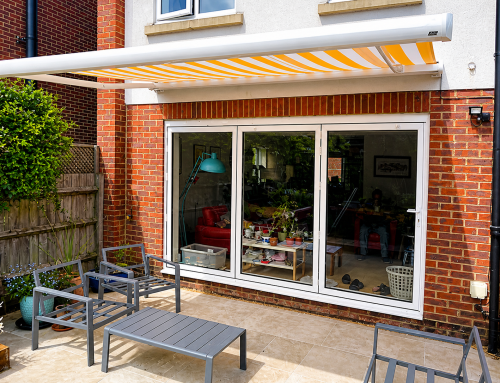
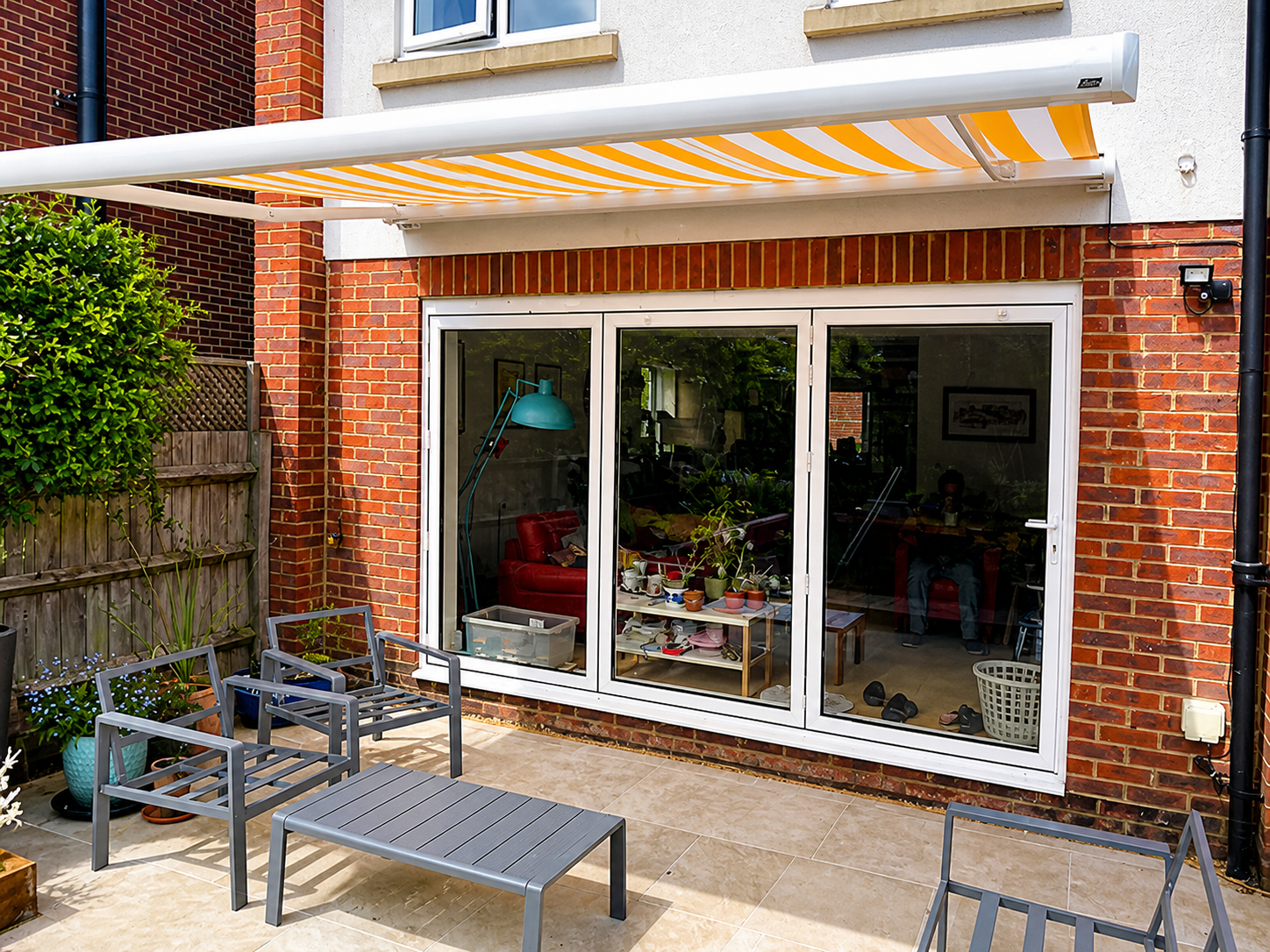
If your awning has spent the summer providing shade over your patio, now is a good opportunity to give it a quick check before its use becomes less frequent.
Brush away any loose leaves, dirt or debris and check the fabric for anything that might need cleaning. Most importantly, make sure the awning is dry before leaving it retracted for extended periods. If it has been caught in the rain, extend it again when you get a dry spell and allow the fabric to dry thoroughly before closing it away. Read more about Awning Maintenance here
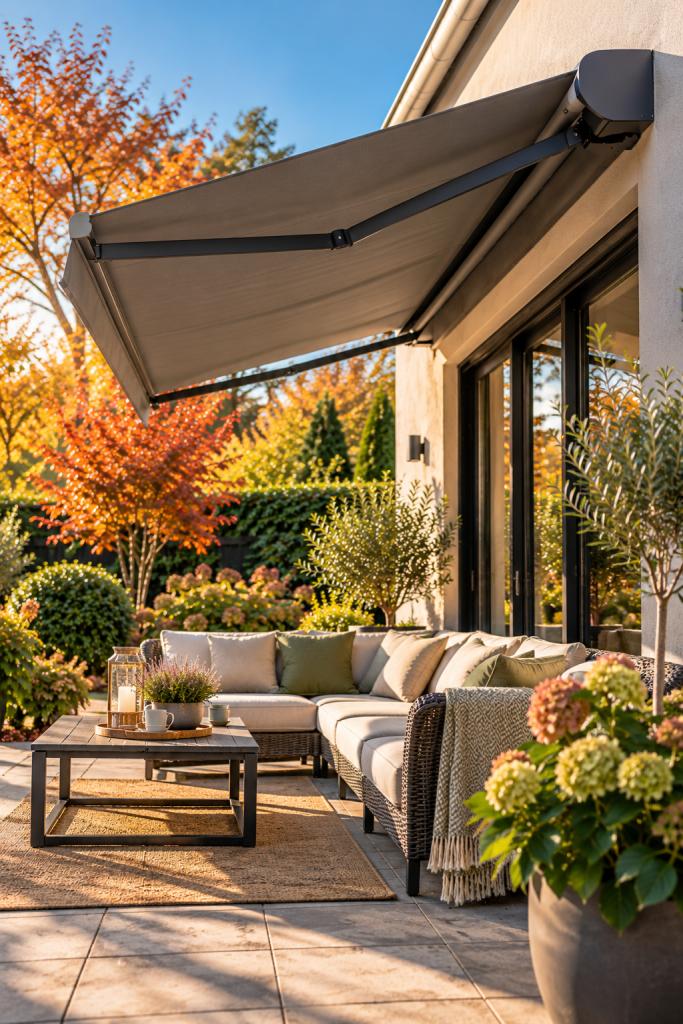
4. Don’t leave your awning extended during autumn storms
Autumn brings much more changeable weather, and wind is particularly important when you have a retractable awning.
An awning creates a large surface area when extended, so strong or gusty winds can put unnecessary pressure on the arms, fabric and fixings.
If high winds or storms are forecast, keep your awning safely retracted.
This is also where optional wind sensors can be useful. Depending on your system, a sensor can automatically retract an electric awning when it detects excessive movement caused by increasing wind.
5. Protect anything that won’t enjoy a British winter
Have a look around the garden and think about what really needs to remain outside. BBQ accessories, decorative cushions, parasols, outdoor rugs and smaller garden accessories can all deteriorate unnecessarily if they’re left exposed to months of rain, frost and wind. Clean and dry anything you’re putting into storage first. It’s a relatively small job now that can save you from replacing things when spring arrives.
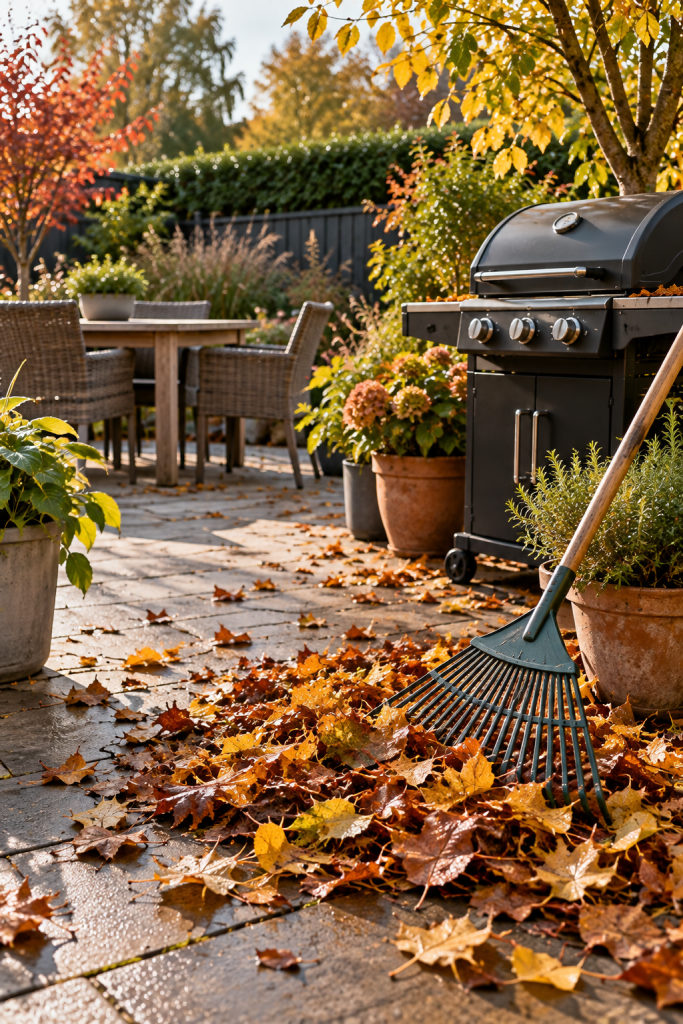
6. Clear away leaves before they become a problem
Autumn leaves look beautiful on the trees. They’re slightly less charming when they’re wet, slippery and decomposing across your patio. Regularly sweeping leaves away helps keep paths and patios safer while preventing piles of damp organic matter sitting against furniture, walls and other garden features. It’s also worth checking gutters and drainage areas as the leaves begin to fall, particularly before periods of heavy autumn rain.
7. Don’t completely give up on the garden
This might actually be the most important one. Summer ending doesn’t mean you have to stop using your outdoor space. September and October can still give us some gorgeous days, and there’s something lovely about sitting outside on a crisp autumn afternoon with a hot drink. If your awning has integrated lighting or heating, you may even find yourself using your patio well beyond the traditional summer season. An awning can provide shade when the autumn sunshine is surprisingly strong, while lighting and heating can make earlier evenings much more comfortable.
8. Take note of anything you’d like to change next year
This is also a brilliant time to look at how you actually used your garden over the summer. Was there a particular area that became unbearably hot? Did you constantly move your table to find some shade? Would you have spent more time outside if you had better lighting in the evening? Did your patio feel exposed or overlooked? These are much easier questions to answer now while you can still remember exactly how the garden worked during summer.
If you’re thinking about adding an awning next year, you don’t necessarily have to wait until the first hot weekend of spring to start planning it.
Closing down your summer garden doesn’t mean saying goodbye to it
Closing down your summer garden is really about getting it ready for the change in seasons. Clean and protect the things that have served you all summer, put away anything that won’t cope well with winter weather, and give your awning a little attention before it spends more time safely inside its cassette. But keep a chair or two handy. British autumn weather may be unpredictable, but there are usually still a few beautiful days left to enjoy before winter properly arrives.
And when spring eventually rolls around again, you’ll be very glad you did the work now.
Frequently Asked Questions
September and October are ideal for many autumn garden jobs. You can gradually clean, store and protect summer items as the weather changes rather than trying to do everything at once.
It depends on the material and manufacturer’s recommendations. Some outdoor furniture can remain outside with appropriate protection, while other furniture will last longer if stored somewhere dry.
A retractable awning should be closed when it’s not being used, particularly during strong winds, storms and prolonged bad weather. A cassette awning protects the fabric and components when retracted.
If you’ve had to retract a damp awning, extend it again when conditions are dry and allow the fabric to dry thoroughly before leaving it closed for a prolonged period.
Absolutely. An awning can still provide useful shade on bright autumn days, and optional lighting and heating can help you enjoy your patio as the evenings become cooler and darker.
Autumn is a sensible time to look over your awning and make sure everything is operating as expected. If you notice unusual noises, problems retracting, damaged fabric or anything else that doesn’t seem right, it’s better to have it looked at rather than leaving the issue until spring.






Leave A Comment