Choosing an awning is about more than simply creating shade. Understanding how to choose the right awning will help you find a solution that complements your home, provides the right level of coverage and allows you to enjoy your outdoor space more comfortably throughout the year.
Whether you want to create a shaded patio for family meals, reduce heat entering your home or make better use of your garden, there are several factors to consider before choosing an awning.
Start by Thinking About How You Use Your Garden
The first step is to consider how you want to use your outdoor space.
Some homeowners simply want shade over a seating area, while others are looking to create an outdoor dining space or somewhere to relax throughout the day. Understanding how you’ll use the area will help determine the most suitable size and position for your awning.
If your patio receives direct sunlight for much of the day, an awning can create a more comfortable outdoor environment while also helping to reduce glare inside your home.
Consider the Position of the Sun
The direction your garden faces can make a significant difference to how an awning performs.
South-Facing Gardens
South-facing gardens receive the greatest amount of sunlight throughout the day. An awning can provide welcome shade during the hottest hours, making patios and seating areas much more comfortable.
Depending on the position of the sun later in the day, an optional front valance may also help provide additional shade when the sun sits lower in the sky.
East and West-Facing Gardens
Gardens that face east or west experience lower sun at different times of the day. Careful positioning of the awning can help reduce glare and improve comfort during breakfast, lunch or evening meals outdoors.


Choosing the Right Size
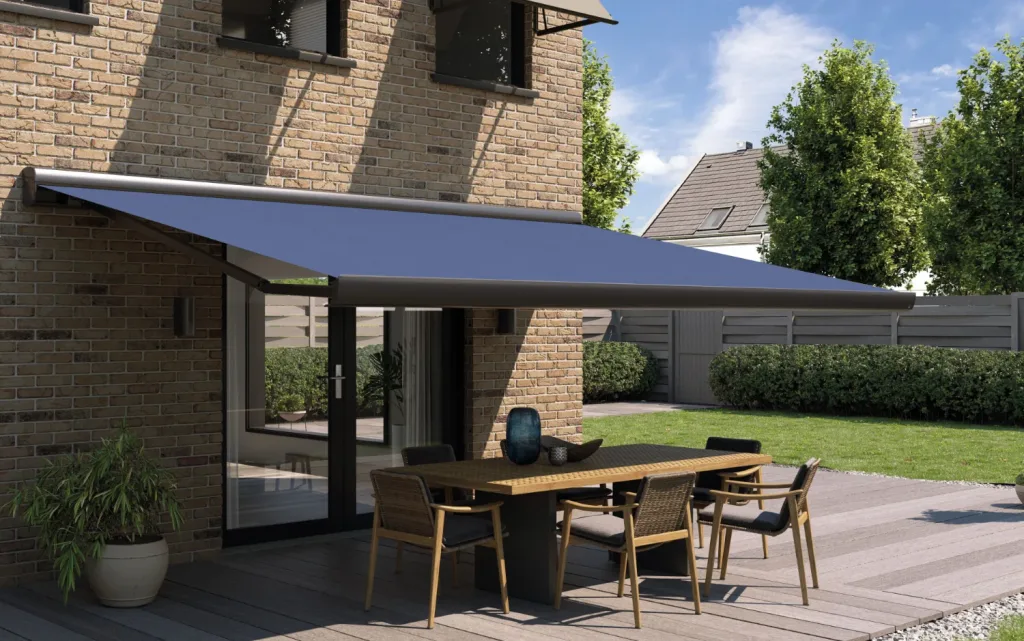
The size of your awning should reflect the area you want to shade rather than simply the size of your wall.
Some homeowners want to cover a small bistro set, while others need enough shade for a large outdoor dining table or seating area.
During a home consultation, measurements are taken to ensure the awning provides practical coverage without overwhelming the appearance of your property.
Think About Projection
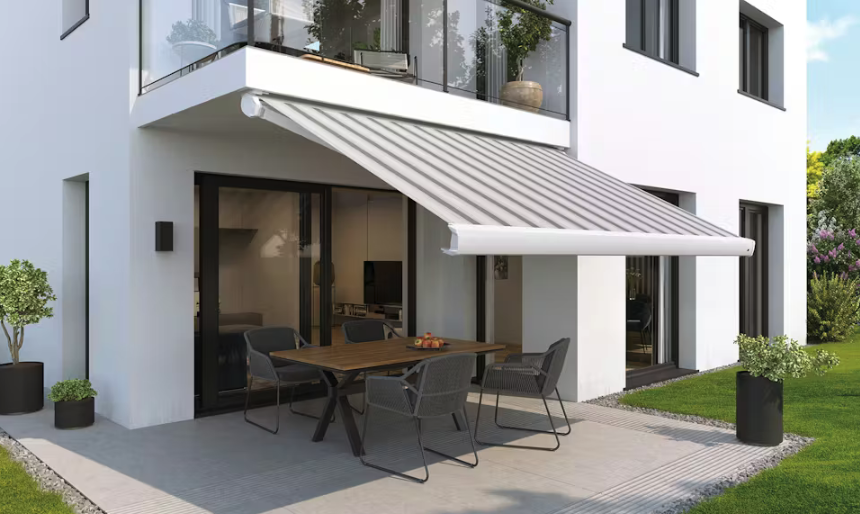
Projection refers to how far the awning extends from your home when fully open.
A greater projection creates a larger shaded area but should always be chosen with the available space and the property’s layout in mind. The right balance will depend on how the outdoor area is used and where shade is needed most.
Consider Optional Features
Modern electric awnings can be enhanced with a range of optional features to improve convenience and comfort.
Popular options include:
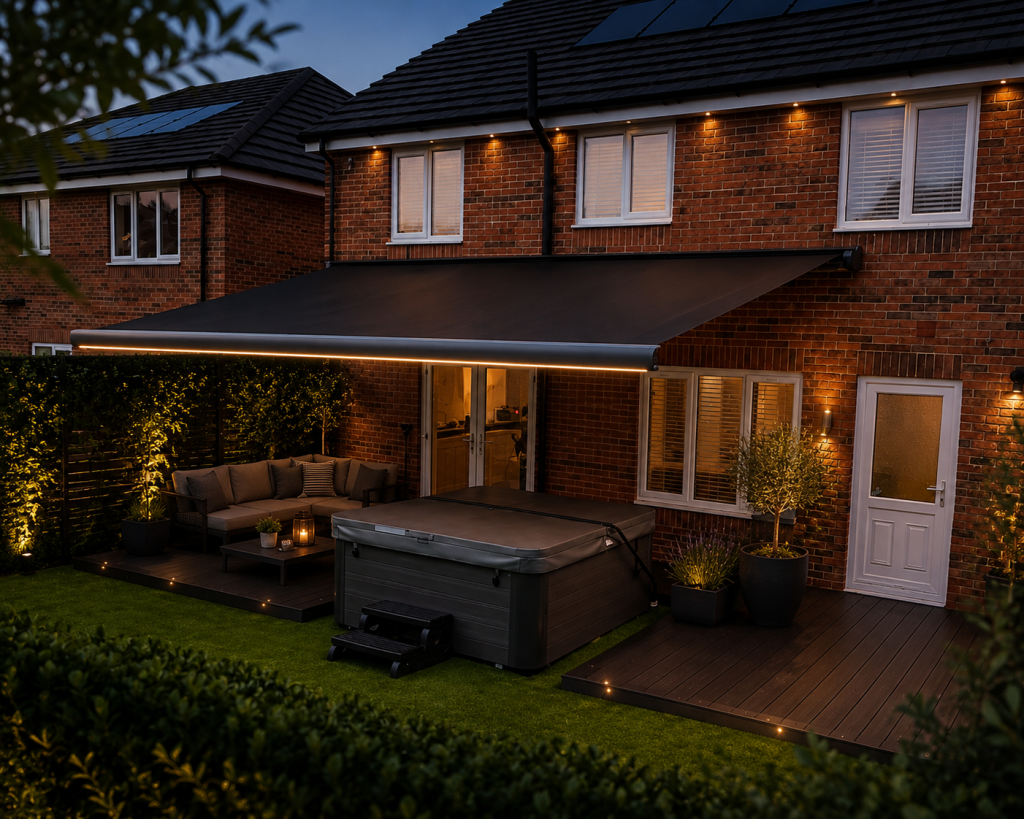
- Integrated LED lighting for evening use.
- Outdoor heating for cooler evenings.
- Wind sensors that automatically retract the awning during stronger winds.
- Sun sensors that respond automatically to changing light levels.
- A front valance for additional shade when the sun is low.
Choosing the right combination of features depends on how often you use your outdoor space and at what times of day.
You can learn more on our Awning Extras & Options page.
Think About the Style of Your Home
An awning should complement the appearance of your property as well as provide practical benefits.
With a wide choice of fabric colours and finishes available, it is possible to choose an awning that blends naturally with your home’s exterior while enhancing your patio or garden.
During your consultation, you’ll be able to view samples and discuss the options available.
Professional Measuring Makes the Difference
Every property is different, and accurate measurements are essential to achieving the best result.
A professional survey considers factors such as wall construction, available fixing points, the size of the patio and the position of doors and windows. This ensures your awning is installed securely and provides the coverage you expect.
It also provides an opportunity to discuss optional features and ask any questions before installation.