
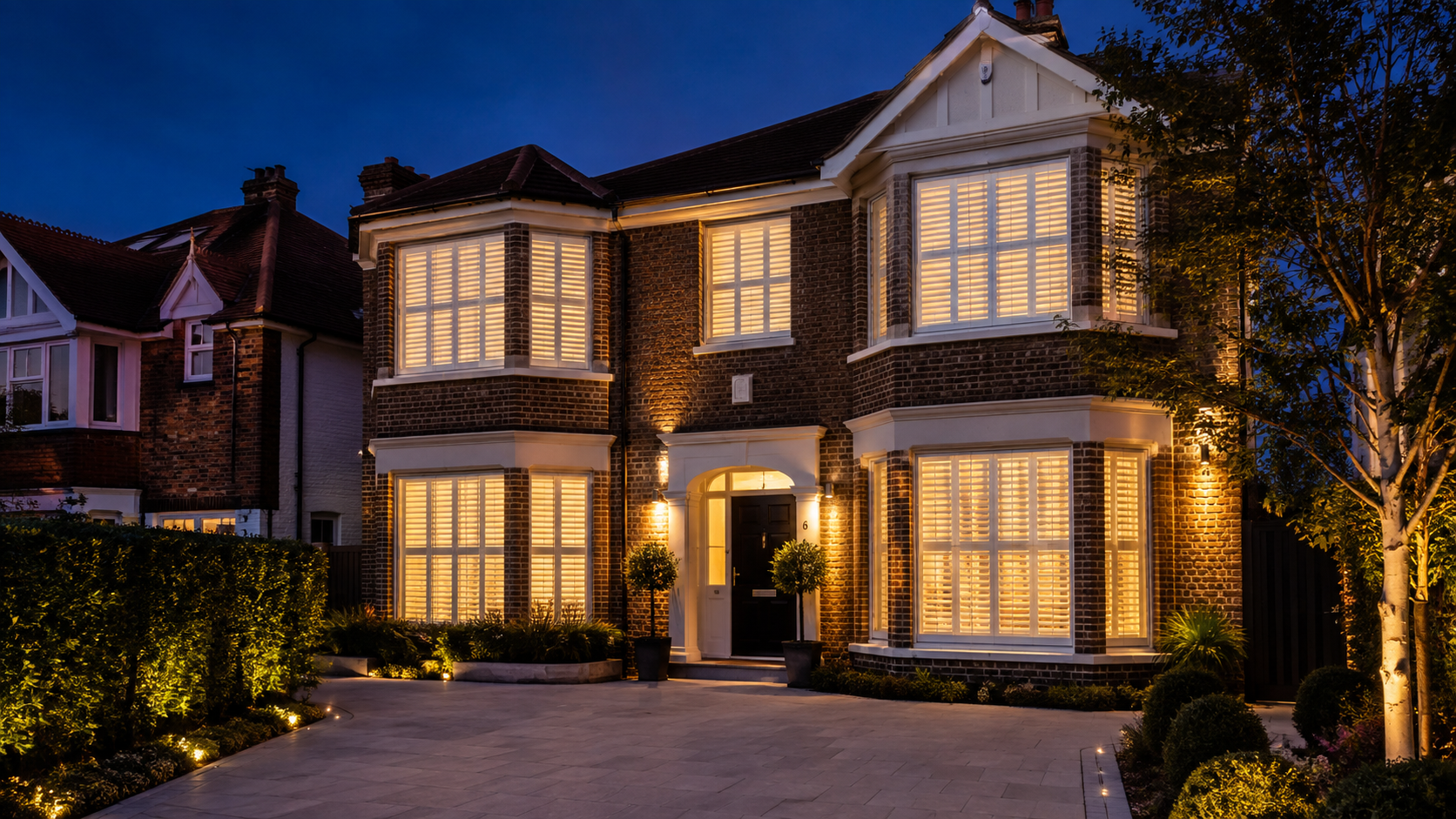
You’ve closed your shutters for the evening, switched the lights on and settled down on the sofa. But then comes the thought: can you see through plantation shutters at night?
It’s a very reasonable question, particularly if you live on a busy street, have neighbours opposite, or you’re considering shutters for a bedroom or bathroom. The simple answer is that when plantation shutters are properly closed, they provide an excellent level of privacy. However, the position of the louvres, the style of shutter you choose and the difference between indoor and outdoor lighting can all make a difference.
So, let’s look at what people outside can actually see.
Why does privacy change after dark?
During the daytime, the outside of your home is usually much brighter than the inside. This naturally makes it more difficult for someone outside to see clearly into your rooms. At night, that relationship reverses.
Once it’s dark outside and your lights are switched on indoors, the inside of your home becomes the brighter space. That’s why an uncovered window can suddenly feel a bit like a display case after sunset. If privacy matters to you, this is where having control over your window covering becomes particularly useful.
Can you see through plantation shutters at night when they’re closed?
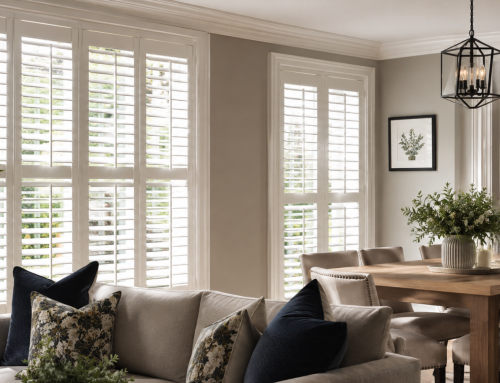
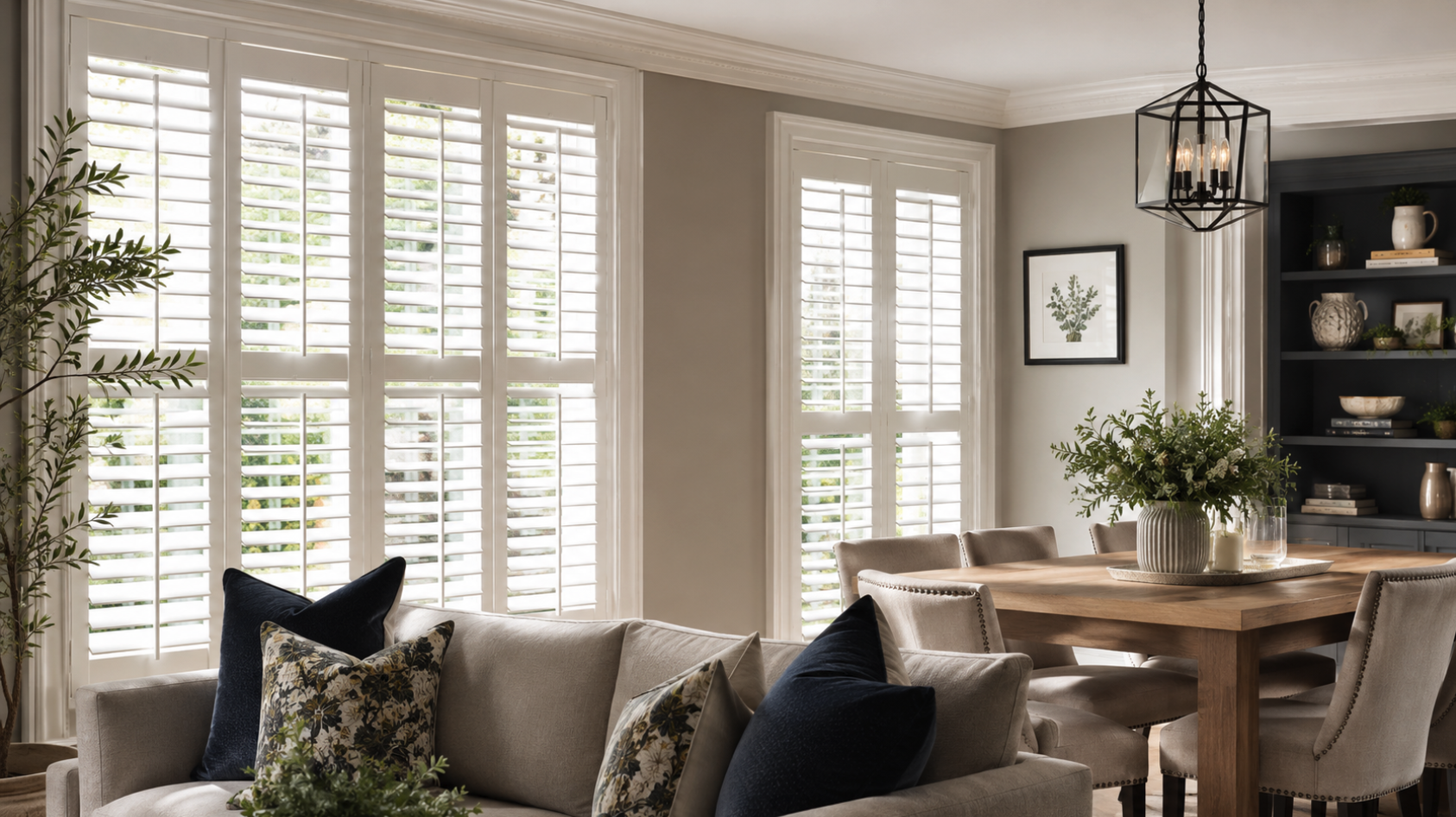
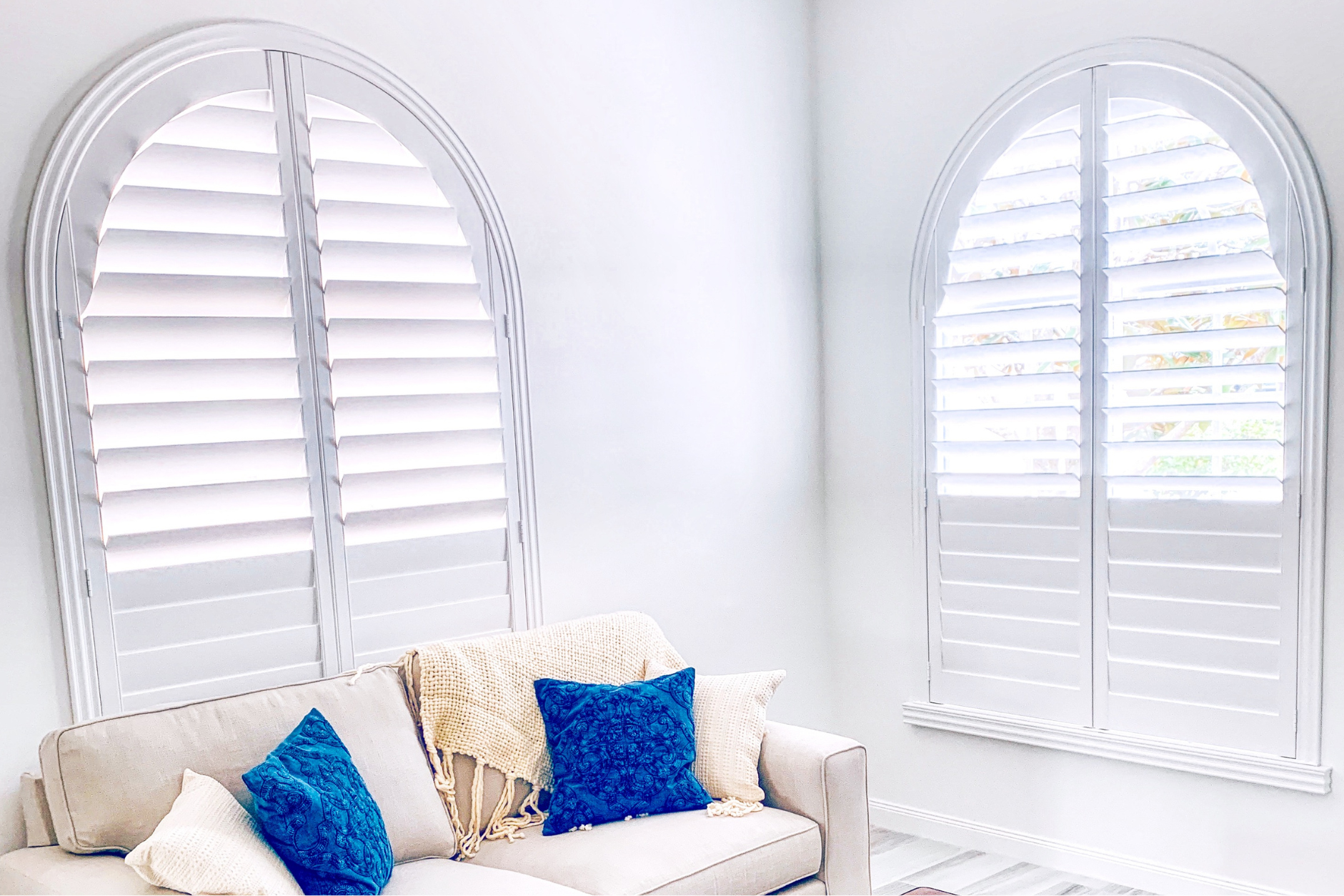
When the panels and louvres are fully closed, plantation shutters provide a high degree of privacy. Unlike some lightweight blinds, shutters create a substantial covering across the window. Closing the louvres prevents a direct line of sight through the glass, so someone passing outside shouldn’t be able to simply look straight into the room. It’s worth remembering that shutters are made up of individual louvres rather than being a solid sheet of material, so we wouldn’t describe them as completely blackout or completely lightproof. But for normal household privacy, fully closed shutters are an excellent option.
Louvre position makes a big difference
One of the best things about shutters is that privacy doesn’t have to be an all-or-nothing decision.
During the day, you might angle the louvres to allow plenty of daylight into the room while limiting the view from outside.
As evening arrives and the lights go on, you can simply adjust them further.
If maximum privacy is your priority, closing the louvres completely removes those direct sightlines into the room.
That flexibility is particularly useful in rooms that face a pavement, neighbouring property or busy road.
What if you want privacy without closing everything?
This is where choosing the right shutter style becomes important.
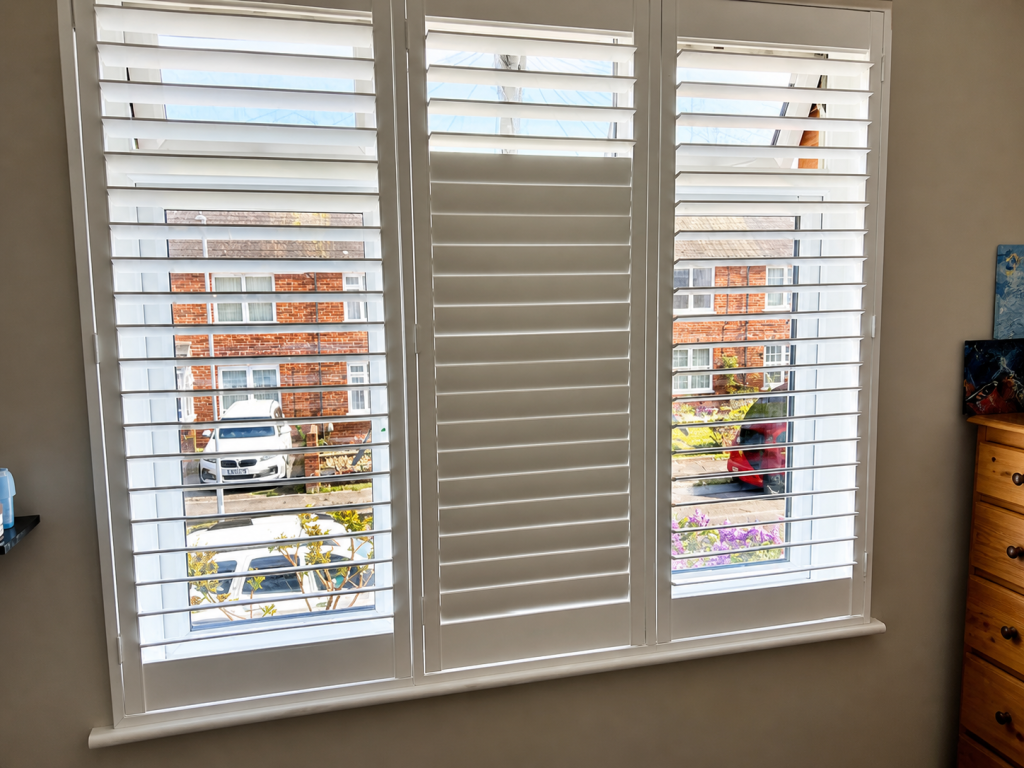
Imagine a front living room where people regularly walk past outside. You might want privacy at sofa level but still enjoy natural light through the upper part of the window during the day.
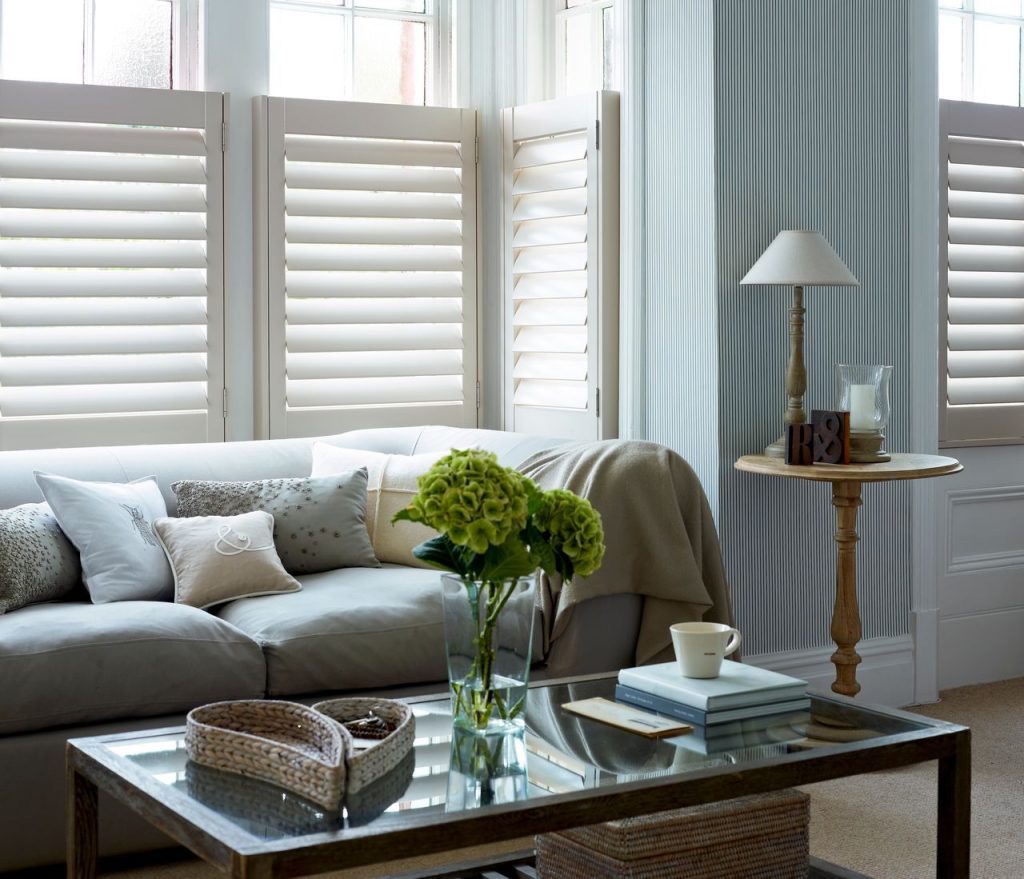
Café style shutters can be a lovely solution because they cover the lower portion of the window while leaving the top open.
Alternatively, tier-on-tier shutters allow the upper and lower sections to operate independently. You could keep the lower section closed for privacy while adjusting the upper section depending on the time of day.
When evening arrives and you want greater privacy, both sections can be closed.
What about bedrooms?
Bedrooms are one of the rooms where nighttime privacy naturally matters most. Full height shutters are particularly popular here because they cover the entire window and allow the louvres to be fully closed in the evening. They also help reduce early morning light, which can be particularly welcome during the lighter summer months.
If you want an especially dark bedroom, shutters can also be paired with curtains. This provides another layer of privacy and light reduction without losing the practicality of shutters during the daytime.
And bathrooms?
Privacy in a bathroom is understandably non-negotiable. The combination of full window coverage and adjustable louvres makes shutters a practical option, particularly for bathrooms that face neighbouring properties or a street. The important thing is choosing a shutter material that’s suitable for a humid environment as well as selecting a configuration that provides the privacy you need.
What about front-facing bay windows?
Bay windows are beautiful, but they can make a room feel particularly exposed.
Because the glass projects outwards, there may be several different angles from which people can see towards the room.
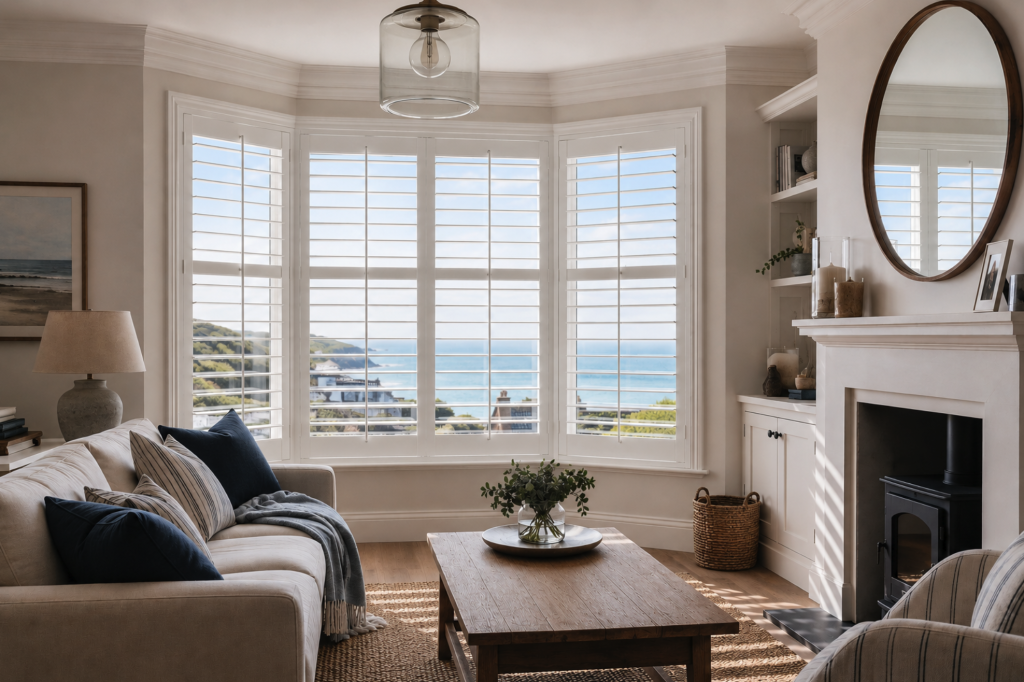
Made-to-measure shutters follow the individual sections of the bay, giving you much greater control over those different sightlines.
During the day, you can adjust individual sections depending on where the sunlight is coming from or where privacy is needed. In the evening, the shutters can be closed to create a much more private living space.
Do shutters provide complete blackout privacy?
There’s an important distinction between privacy and blackout. Plantation shutters provide excellent privacy when closed, but small amounts of light may still be visible around the louvres, panels or frames. That’s completely normal. Seeing that a light is switched on inside a house is very different from being able to see clearly into the room.
If complete darkness is important, particularly in a bedroom, you may want to combine shutters with another window treatment.
Choosing shutters around the privacy you need
Every home is slightly different. A first-floor bedroom overlooking a garden has very different privacy requirements from a ground-floor living room directly beside a pavement. That’s why it’s worth thinking about how each window is actually used rather than simply choosing the same shutter configuration throughout the entire house.
During a home survey, you can discuss where privacy is most important, how much natural light you’d like to retain and which shutter styles will give you the right balance.
So, can you see through plantation shutters at night?
So, can you see through plantation shutters at night? When the shutters and louvres are properly closed, they provide a high level of privacy and prevent a clear view into your home. The real advantage is the control they give you. During the day, you can adjust the louvres to balance privacy with natural light. When darkness falls and your indoor lights come on, you can close them further whenever you need more privacy.
If privacy is one of the main reasons you’re considering shutters, our free home survey gives you the opportunity to discuss your individual windows and find the style and configuration that works best for your home.
Frequently Asked Questions
When the shutter panels and louvres are fully closed, they prevent a clear line of sight into the room and provide a high level of privacy.
Depending on the strength and position of your indoor lighting, some light or general shadows may occasionally be noticeable from outside. However, this is different from someone being able to see clearly into the room.
Full height shutters provide complete window coverage, while tier-on-tier shutters offer excellent flexibility because the upper and lower sections can be controlled independently. The best option depends on your window and how much privacy you need.
Café style shutters provide privacy across the lower portion of the window, but the upper glass remains uncovered. They’re ideal where lower-level privacy is the priority, but full height or tier-on-tier shutters may be preferable if you need complete window coverage at night.
Yes. Adjustable louvres allow you to restrict views into the room without necessarily blocking all of the natural light, making shutters particularly useful for ground-floor and street-facing windows.


Leave A Comment