
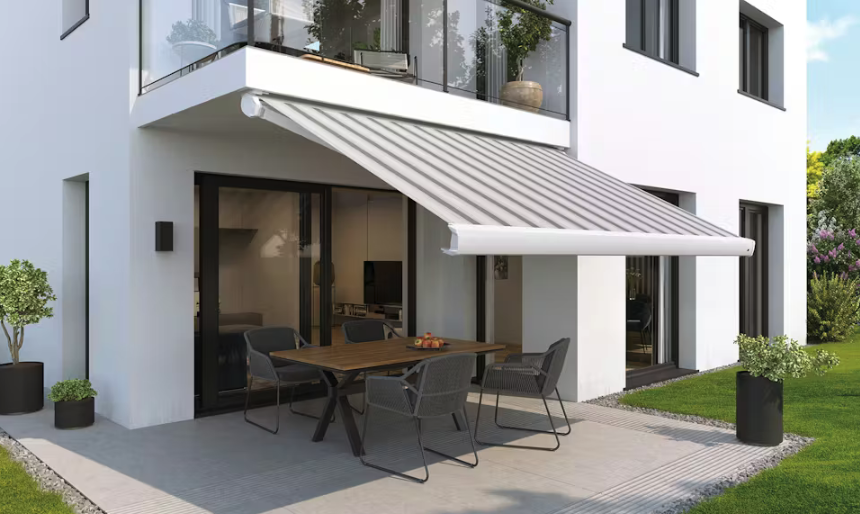
British summer weather has a habit of changing its mind. One minute you’re sitting beneath your awning enjoying lunch in the sunshine, and the next you’re looking at a very dark cloud and wondering whether it’s time to head inside. You might ask yourself; can I use my awning in the rain?
A retractable awning can provide useful shelter from an occasional light summer shower, but it isn’t designed to replace a permanent waterproof roof. Heavy rain, prolonged wet weather, strong winds and stormy conditions are very different, and knowing when to retract your awning is important for protecting it.
Here’s what you need to know.
A light shower doesn’t necessarily mean the end of lunch
We’ve all been there. The table is set, everyone is outside and suddenly you feel the first few drops of rain. One of the lovely things about having an awning is that a brief light shower doesn’t necessarily mean everybody immediately has to abandon the garden. An extended awning can provide some shelter from passing light rain, giving you time to finish your coffee or move things inside. However, there’s an important difference between providing occasional shelter and being designed to withstand persistent rain.


An awning isn’t a permanent roof
This is probably the most important thing to remember.
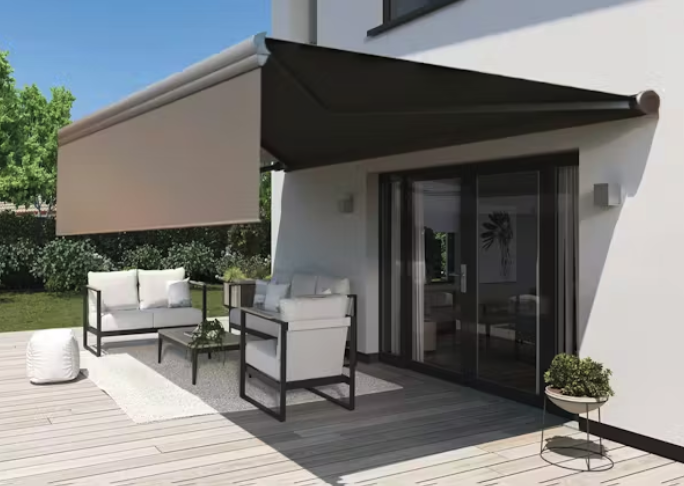
A retractable fabric awning is primarily designed to provide shade and create a more comfortable outdoor living area. It should not be treated in the same way as a solid pergola, veranda or permanent roof. During heavier rain, water can begin collecting on the fabric faster than it can run away. That extra weight puts unnecessary strain on the fabric, arms and fixings. If water begins pooling rather than running freely from the awning, it’s time to bring it in.
Can you use an awning in heavy rain?
We wouldn’t recommend it. When rainfall becomes heavy or persistent, retracting your awning helps protect both the fabric and mechanism. And rain isn’t always the biggest concern. Sudden summer downpours are often accompanied by gusty winds. A large extended awning effectively presents a substantial surface to the wind, so conditions can change surprisingly quickly.
If the weather is becoming stormy, retract the awning rather than waiting to see what happens.
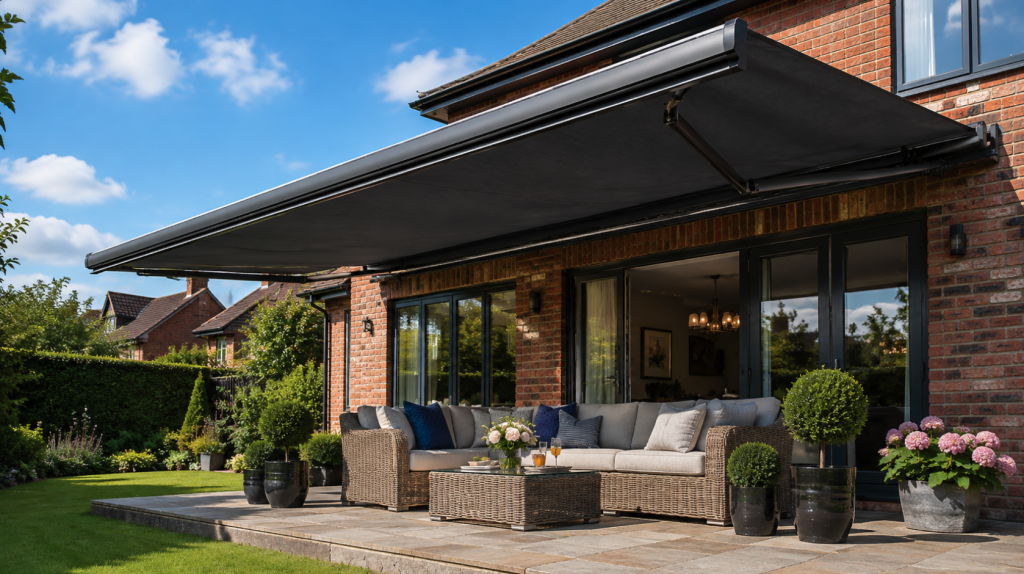
What if your awning gets caught in a sudden downpour?
Don’t panic.
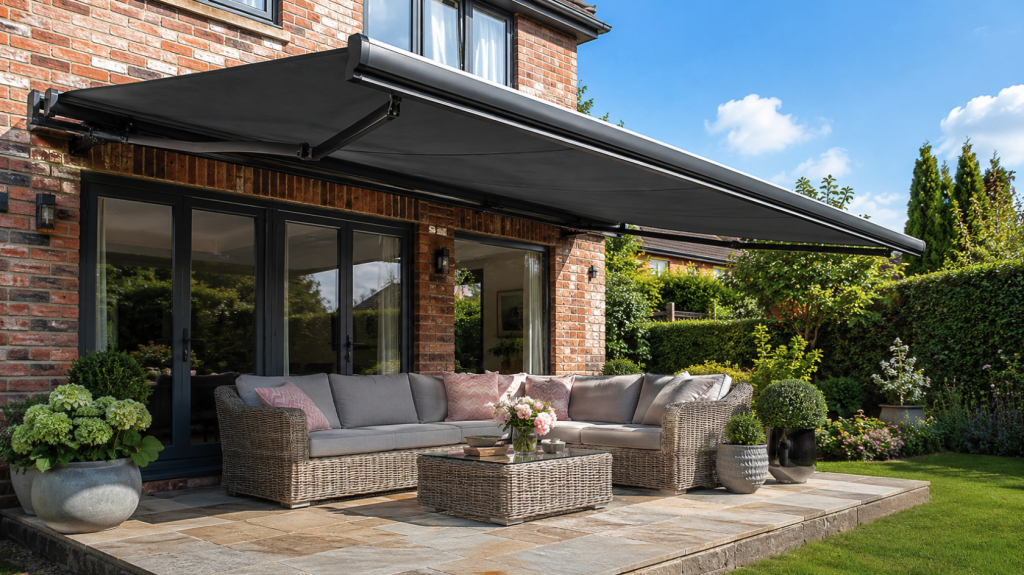
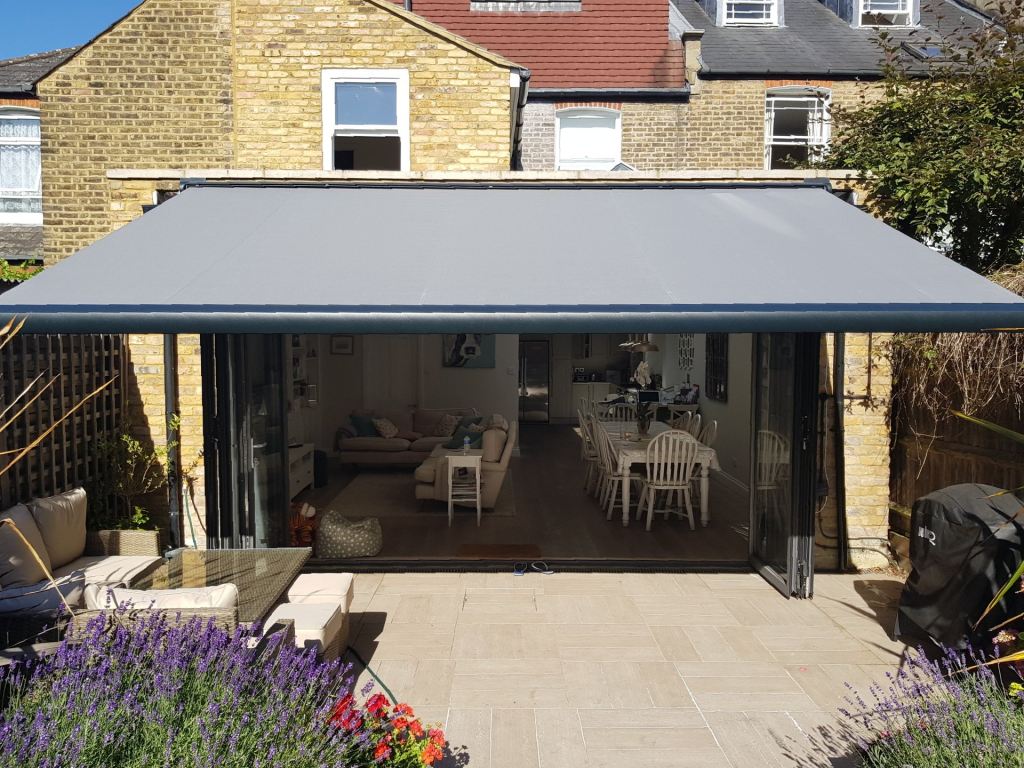
An unexpected shower doesn’t mean you’ve damaged your awning. If conditions allow you to retract it safely, bring it in and wait for the weather to pass. Once conditions improve, extend the awning again and allow the fabric to dry thoroughly. The important thing is not to leave wet fabric rolled inside the cassette for an extended period. Giving it an opportunity to air and dry helps keep the fabric in good condition.
Why wind matters just as much as rain
Rain is visible. Wind can catch people by surprise.
A sunny day can still become gusty, particularly during changeable weather, and an extended awning can be vulnerable to sudden strong winds. This is where an optional wind sensor can be particularly useful. The sensor can detect increasing movement and automatically retract the awning, adding another layer of protection if conditions change unexpectedly. It’s especially handy if you’ve stepped inside and forgotten the awning is still extended.
What about leaving the awning out overnight?
It’s easy to finish an evening outside and simply forget about the awning.
However, retracting it when you’ve finished using your outdoor space is a good habit to get into.
Weather can change overnight, and bringing the awning back into its cassette protects the fabric and mechanism from unnecessary exposure when you’re not actually using it.
You can simply extend it again the next time you head outside.
A protective cassette makes a difference
One of the advantages of a cassette awning is what happens when you’re not using it.
Once retracted, the fabric and mechanical components are enclosed within the cassette rather than remaining exposed to rain, dirt and changing weather.
That protection helps keep everything cleaner and reduces unnecessary exposure throughout the year.
It also means your awning can sit discreetly against the property until the next time you want it.
What about using your garden after the rain?
One of the benefits of an awning is that British weather doesn’t have to dictate every moment you spend outside.
A shower might pass, the sun comes back out, and within minutes you can extend the awning again and carry on enjoying your patio.
Add optional lighting and heating, and that outdoor area can remain useful well beyond the hottest summer afternoons.
The key is simply understanding what your awning is designed to do and treating it accordingly.
So, can you use an awning in the rain?
So, can you use an awning in the rain? For occasional light showers, an awning can provide useful temporary shelter. When the rain becomes heavy, prolonged or is accompanied by strong winds, however, retracting your awning is the safest option. Think of your awning as a flexible way to create shade, shelter and a more comfortable outdoor living area rather than a permanent all-weather roof. Look after it when the weather turns, allow wet fabric to dry properly and retract it when conditions become unsuitable, and you’ll help keep your awning looking and working its best for years to come.
Frequently Asked Questions
During a brief, light shower, an awning can provide some useful shelter. It shouldn’t be relied upon during heavy or prolonged rain.
Awning fabrics are designed for outdoor use and can cope with occasional moisture, but a retractable awning should not be treated as a permanent waterproof roof.
If you’ve had to retract a damp awning, extend it again once the weather improves and allow the fabric to dry thoroughly before leaving it closed for a prolonged period.
Yes. Strong winds and heavy rain can place considerable strain on an extended awning, so it should be retracted when stormy conditions are expected.
A compatible wind sensor can detect movement caused by increasing wind and trigger the electric awning to retract automatically, helping protect it when conditions change.




Leave A Comment